Thursday, 17 November 2022

Celebrating World Kindness Day 2022 and the International Day for Tolerance 2022 Together

On November 16, the two coordinators of the eTwinning project "We are valuable with values", together with the project team members, celebrated World Kindness Day 2022 and the International Day for Tolerance 2022 with the help of 20 quotations and a Powerpoint presentation in Romanian and English. We also shared our favourite Kindness and Tolerance Quotes in the collaborative padlet  https://padlet.com/claudiaemiliafrinculeasa/32b21cl0yxh0znj5


Wednesday, 16 November 2022

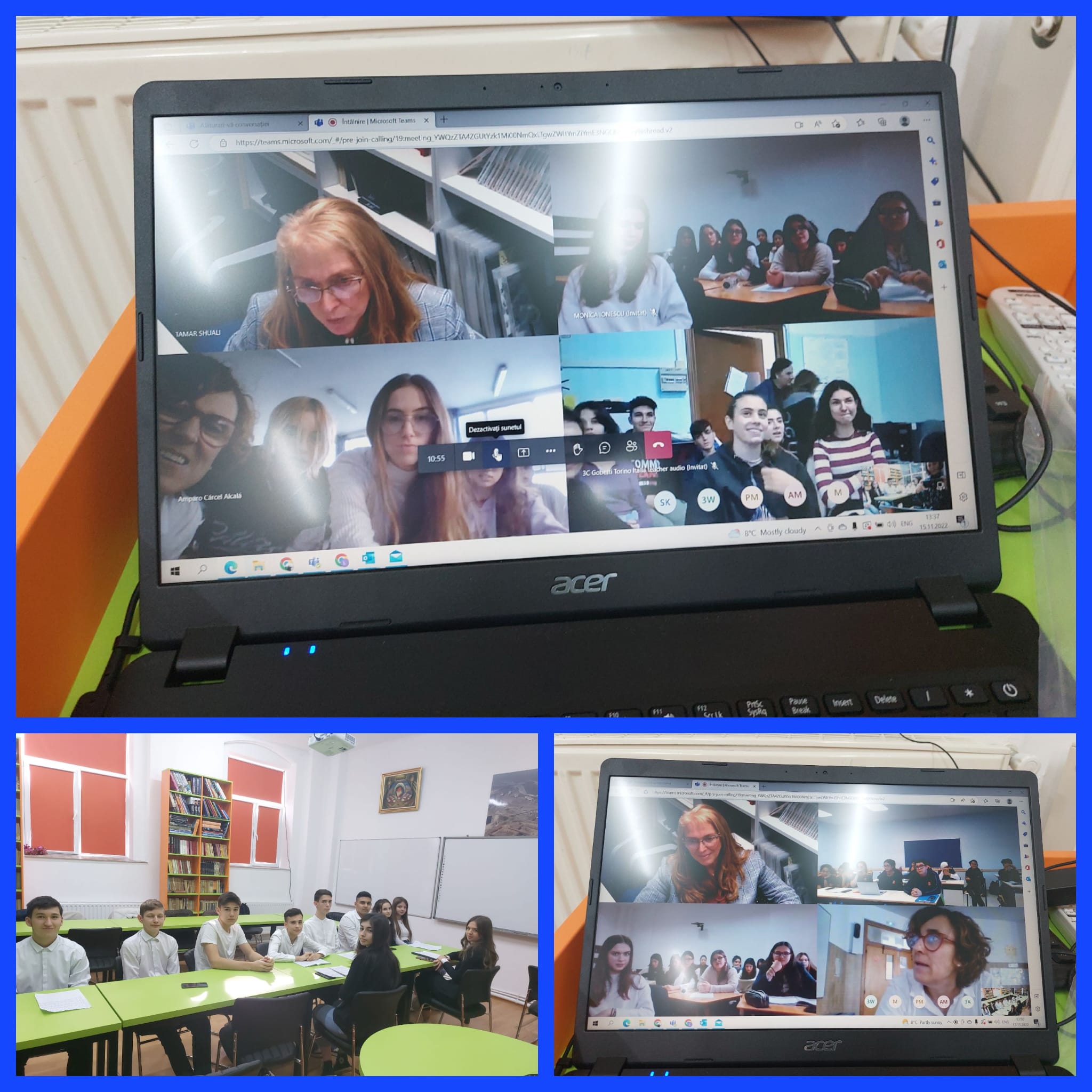
GEW 2022 - an International Virtual exchange and an amazing learning experience for students and teachers from 4 European countries: Spain, Italy, Malta and Romania


Equality or Equity in Education? (round-table discussion)

15.11.2022

General aim of the activity: to provide an opportunity for intercultural cooperation and exchange of experience and good practices under the auspices of the Global Education Week 2022

Specific aims: 
- to develop the linguistic and digital competences of 10 Romanian students as well as their initiative, problem-solving, critical and creative skills; 
- to encourage virtual cross-border collaboration and intercultural dialogue, civic engagement and public debate while promoting Global Education.

In Romania, at Liceul Teoretic "Radu Vlădescu", during the round-table discussion on the topic of Equality vs. Equity in Education, we identified valuable ideas, personal opinions and potential solutions to the current problems in the fields of local, national and global education. 

Before the meeting, the 10 Romanian students aged 16-17, were provided with short videos on equity and the differences between equality, equity and empowerment, by their teacher of English and form-teacher, in the context of Global Education Week 2022:  https://learningapps.org/view26121500https://youtu.be/X0N22PMdF1U , https://youtu.be/tcPGacPFt6E .

Then the students answered the following questions:

1. Are we born equal? Why (not)?

2. Why is equity more difficult to achieve than equality?

3. Which are the main causes of inequity in education at local level? (eg rural-urban disparity, richer vs. poorer backgrounds/socio-economic factors, family problems, geographical disadvantages, health problems and emotional disorders, disabilities, special needs, lack of individual discipline, responsibility and motivation etc.)

4. Which are the main causes of inequity in education at global level? (eg poverty, racism, gender discrimination, migration, family status and values, cultural background, school and family resources, wars and conflicts, favoritism or bias, individual circumstances and qualities etc.)

5. How can we ensure equity in education as individuals - teachers and students, school communities and societies?/ What are the local and global solutions to the lack of inequity? (eg addressing the systemic issues that create the inequities, providing fairer access to educational resources and technology, remedial measures, increasing resilience, solidarity and motivation etc.)

6. How can we empower ourselves and fulfil our individual potential regardless of income, gender, age, race, ethnicity, migratory status, disability, geographic location, and other characteristics?

During the virtual exchange, we shared our views with the students from Colegio San Bartolomé, Valencia, Spain, coordinated by Mrs. Amparo Carcel.

Conclusions: Equity in education is vital both locally and globally, in a civilised society built on democracy, fairness, solidarity and inclusion, in which everyone deserves to live a full life and contribute to society. It is also essential to economic growth, poverty reduction, gender equality, public health, conflict resolution and the transformation to sustainable production and consumption. Ensuring both equality of opportuity for learning and equity in education would further accelerate the empowerment of the younger generations and the achievement of the Sustainable Development Goals (SDGs).

Results: 10 Romanian and 15 Spanish students more informed on the topic of interest, more self-confident and motivated to participate in intercultural partnerships based on GEW values and practices changing attitudes and behaviours for the benefit of the European and global community.

The last part of the activity was about sharing very short conclusions with all the participants and collecting their feedback using Mentimeter.

Thursday, 10 November 2022

Bibliography List of Sources Used for Teaching English (2022-2023)


1. Evans, Virginia 2002, Successful Writing, Express Publishing;

2. Harmer, Jeremy 2001, The Practice of English Language Teaching, Pearson Education Limited;

3. Scrivener, Jim 2008, Learning Teaching, Macmillan;

4. Swan, Michael 1996, Practical English Usage, Oxford University Press;

5. Vince, Michael 2007, English Grammar in Context Intermediate with Key, Macmillan;

6. Vince, Michael, Advanced Language Practice, Third Edition, Macmillan;

7. Vizental, Adriana, 2014, Metodica Predării Limbii Engleze, Ed. Polirom;

8. Common European Framework of Reference for Languages: Learning, Teaching, Assessment (CEFR) /Cadrul European Comun de Referință pentru Limbi/ https://www.coe.int/en/web/common-european-framework-reference-languages .


BELF 101: understanding BELF basics (a remarkable international exchange of knowledge, experience and good practices)

 For more information visit Bit.ly/belfsite


Wednesday, 9 November 2022

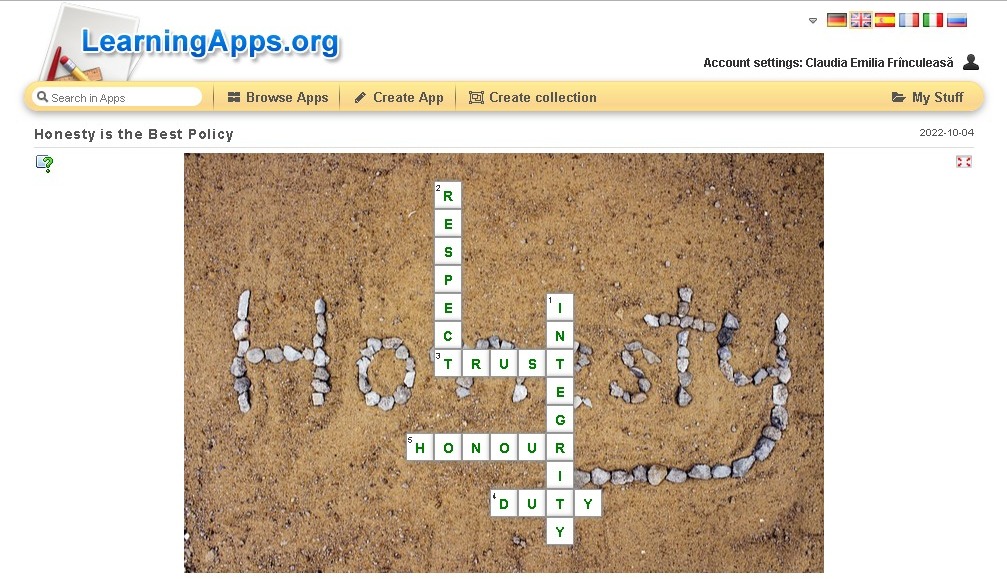
"We Are Valuable with Values" - 3 interactive resources created for our international eTwinning project

The 3 learningapps interactive resources were created to promote 3 human values most appreciated by our pupils enrolled in the 5th grade: friendship, honesty and respect.

A Friend in Need is a Friend Indeed


Two of the best professional development opportunities to date for teachers of ESL


The webinar Getting Creative in Low-Resource Contexts provided by British Council - an eye-opening, mind-blowing experience


The Complete CELTA Experience Webinar organized by Shakespeare School - a revelation in terms of how to become a global teacher of English


Friday, 4 November 2022

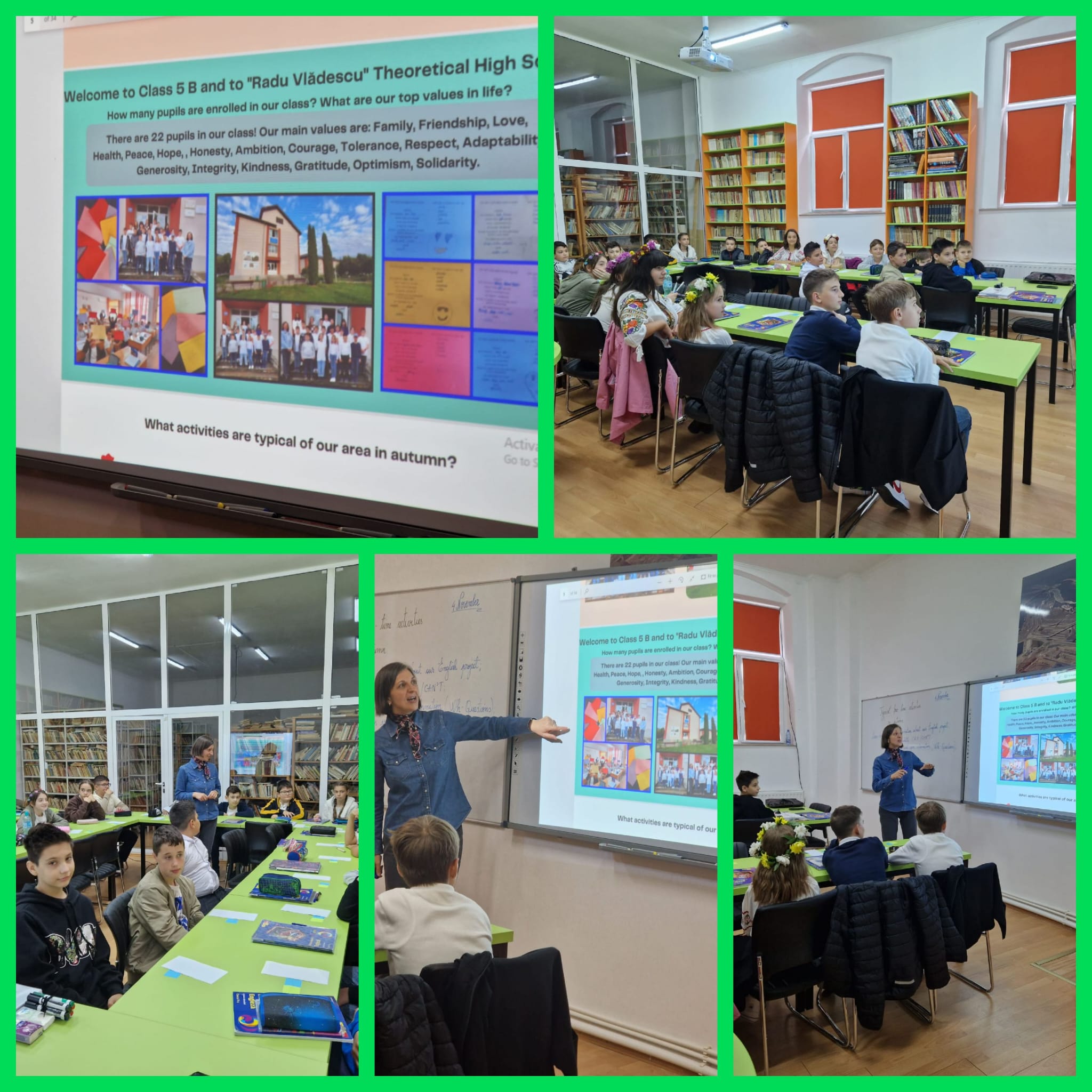
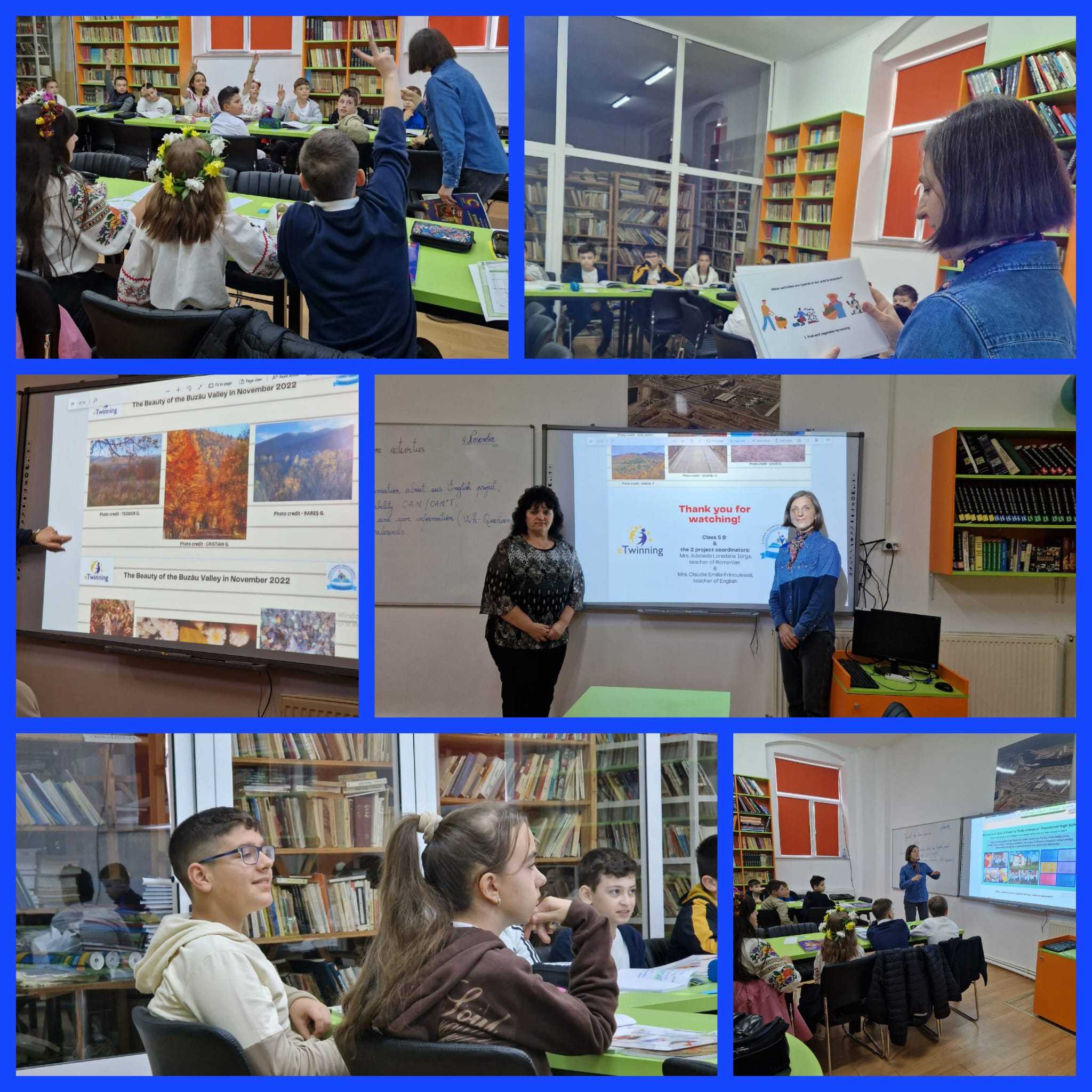
"Typical activities of our area in autumn" - a transdisciplinary lesson for the 5th graders


On 4 November 2022, the 2 coordinators of the eTwinning project "We Are Valuable with Values", Mrs. Iorga Adelaida Loredana and Mrs. Frînculeasă Claudia Emilia, facilitated the development of key-competences and value-systems through Project-based learning for their pupils enrolled in class 5B at Liceul Teoretic "Radu Vlădescu", in Pătârlagele town, Buzău county, Romania.


The transdisciplinary lesson, which aimed at exchanging both experience and good practices, was attended by a teacher of English (Mrs. Mihaela N.) and the school librarian (Mrs. Liliana G.). It was related to several communicative functions from the English language curriculum for the 5th grade: expressing ability (CAN/CAN'T), making up questions, finding information (Wh-questions), expressing preferences etc. The specific competences developed/improved during the project-based learning activity were: 3.2., 4.2., 2.3., 2.4.

Integrating the project into the English language curriculum for 5th graders in Romania will take into consideration the following general and specific competences from the curriculum:

1. Understand oral messages in everyday communication situations
1.1. Identify the overall meaning of clearly articulated everyday messages and dialogues
1.2. Identify the meaning of clearly articulated everyday verbal exchanges with clarification from the speaker
1.3. Develop interest in specific aspects of the culture of the language studied

2. Speak in everyday communication situations
2.1. Describe people / characters in a simple way
2.2.Establish social interaction based on simple conversational formulas (greetings, introductions, thanks, instructions)
2.3. Express preferences
2.4.Show willingness to participate in a dialogue

3. Understand written messages in everyday communication situations
3.1. Identify information from panels and signs displayed in public places for navigational purposes
3.2.Select information from a short text accompanied by illustrations
3.3. Identify information in simple written messages from friends or peers
3.4. Show curiosity for reading navigational texts

4. Write messages in everyday communication situations
4.1. Write short, simple messages
4.2. Describe aspects of daily life (people, places, school, family, hobbies), using short sentences
4.3.Show willingness to exchange simple written messages